

Bavaria Germany Dealers Meeting 2025

BAVARIA Brandschutz GmbH & Co KG, a subsidiary of BAVARIA Holding, hosted its annual dealers meeting in early July in Teistungen, Germany. The event was attended by senior executives including Mr. Amir Riad, Vice Chairman and Ms. Sandra Riad, Business Development Manager and Board Member of the parent company.
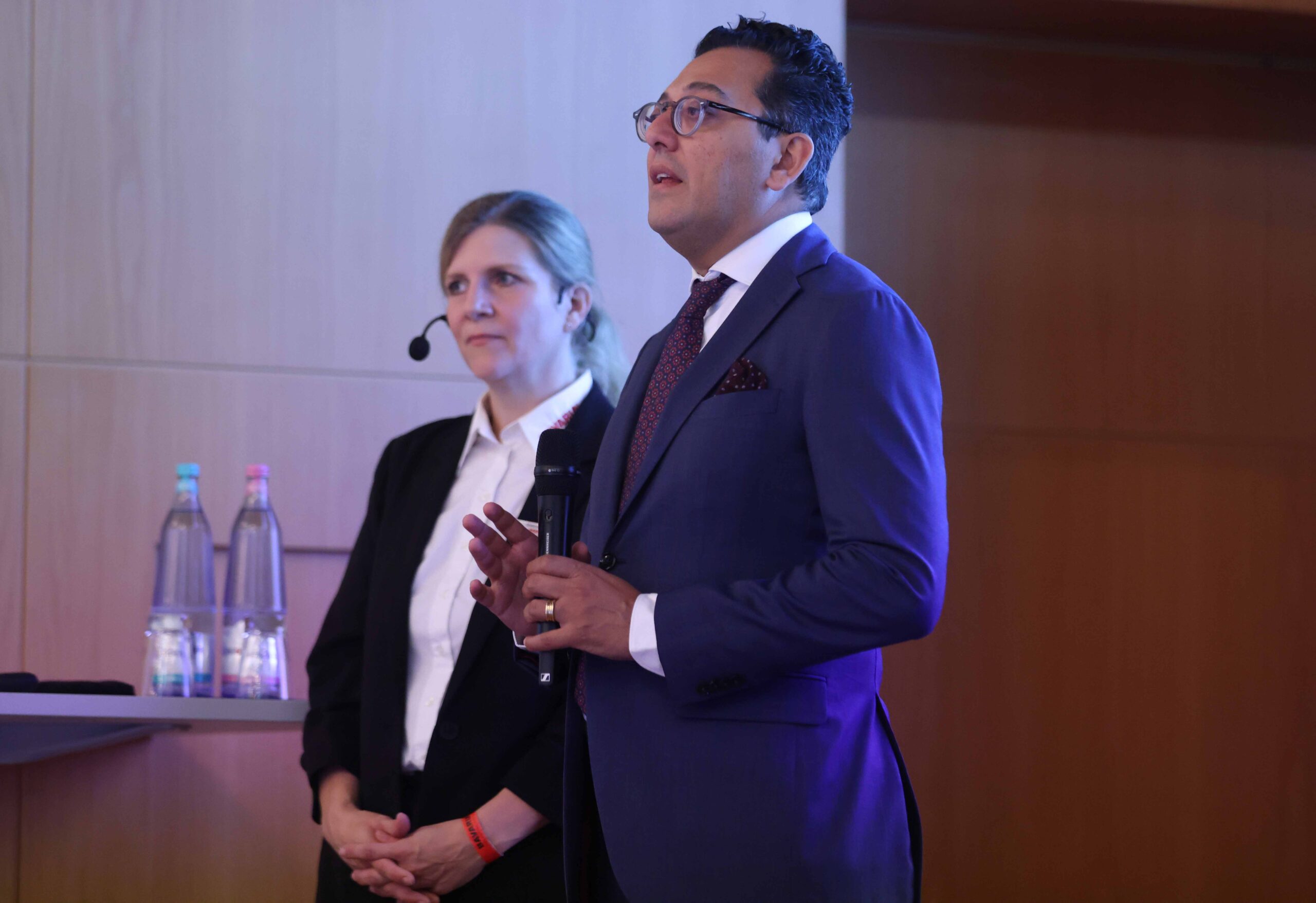

Over the course of two days, the meeting provided a platform to review the latest industry developments, showcase the company’s ongoing growth, and introduce its newest product innovations.
The conference emphasized the value of a global perspective in staying ahead of evolving market trends and achieving long-term, sustainable growth.
The company also recognized and celebrated its newest dealers alongside its long-standing, trusted partners who have been integral to its journey.


Visit of Lieutenant General Engineer Kamel Al-Wazir to Bavaria Egypt Factory

Lieutenant General Engineer Kamel Al-Wazir, Deputy Prime Minister for Industrial Development and Minister of Industry and Transport, paid an official visit to Bavaria Egypt’s fire-fighting equipment factory in Gesr El-Suez, Cairo.
He was welcomed by Dr. Engineer Nader Riad, Chairman of Bavaria Group; Engineer Amir Riad, Vice Chairman; Ms. Sandra Riad, Business Development Manager; and Board Member Mr. Gamal Khaled Abdel Nasser.
Comprehensive Facility Tour: The minister toured the facility’s production lines, including automated forming, coating, painting, surface treatment, filling, and assembly. He also inspected the welding robot section, paint line, automated storage systems, and export dock.


High Production Capacity and Export Reach: Bavaria Egypt manufactures over 2 million automotive fire extinguishers and 800,000 handheld units annually, in addition to self-operating devices, alarm systems, and automated suppression systems. The company collaborates with Military Factory 200 to produce fire trucks and exports approximately 40% of its output to Europe, with an annual growth rate of 8%.


Strategic Remarks from the Minister: During the visit, Al-Wazir emphasized the government’s commitment to supporting the industrial sector as a key pillar of Egypt’s Vision 2030. He praised Bavaria Egypt as a model of technological localization, investment attraction, and job creation, aligning with the national strategy to revive stalled factories and expand global market access.

Leadership Perspective: Engineer Amir Riad highlighted the role of recent infrastructure reforms in fostering a robust industrial climate. He noted that Bavaria Germany’s ranking improved from 13th to 4th in Europe over eight years, with 65% of its operations now relying on Egyptian production.

Tribute to the Workforce: Concluding the visit, the minister met with factory workers in the Khalideen Hall, expressing pride in their dedication and urging them to continue safeguarding this industrial stronghold, which he described as a source of national pride.


The 28th Arab-German Business Forum Berlin, May 19-21, 2025

Amir Riad, Vice Chairman BAVARIA Holding, participates in the 28th Arab-German Business Forum from May 19-21 at the Ritz-Carlton Hotel in Berlin. This business forum is annually organized by the Arab-German Chamber of Commerce and Industry GHORFA. As a Board Member, he also attended the Board and General Assembly meetings held prior to official opening.
Amir Riad participated in the panel discussion on Egypt lead by His Excellency Engineer Hassan El Khatib, Minister of Investment and Foreign Trade of Egypt. The panel discussion focused on strategic Egyptian-German economic cooperation, as Egypt is becoming more and more a strategic hub for business and investment with vast opportunities for German companies.
Amir Riad also participated in the exclusive roundtable session headed by the Egyptian Minister, where he met a number of lead companies that were present which play a significant role in the Egyptian-German business partnership. The minister presented a very well planned economic and investment vision of Egypt that is focused on the reduction of indirect taxes and levies placed on companies, reduction of transit time of goods and digital reform of bureaucracy and increasing competitiveness.
The forum aims to strengthen business relations between Arab and German companies in various fields. Several panel discussions and roundtable sessions were dedicated to Egypt and to the support of German investments in Egypt.
His Excellency the Egyptian Ambassador, Dr. Mohamed El-Badri, also hosted a dinner for members of the Board of Directors of the Arab-German Chamber of Commerce and Industry GHORFA at the Egyptian Embassy in Berlin, May 19. This dinner was hosted in honor of the Egyptian delegation participating in the forum.
The dinner was attended by a selected group of Chamber members and forum participants along with key German companies operating in Egypt. Amir Riad thanked His Excellency the Ambassador for the kind invitation and his continuous support for activities that enhance the Egyptian-German business cooperation.


Bavaria’s Successful Review of Company Products during the Unannounced TÜV Inspection Visit
The company’s products have successfully passed the unannounced inspections, performed on March 11-16th, 2012 by the German TÜV team, on all products and heads of portable and mobile fire extinguishers under the various types and capacities of our production, according to the EU standards pertaining to special equipment and pressure vessels under the Pressure Equipment Directive (PED 97/23/EC) of the two modules B, C1.

It is worth mentioning that this successful periodic round happens to be the fifteenth passed round over the last fifteen years with no exception, demonstrating the company’s quality pledge and commitment to the European and German Standards’ specifications and certification guidelines. Mr. Daniel Brauer, a Chief Inspector of the German TÜV, has praised the quality standards of the company’s products, production lines and laboratories.

Dr. Nader Riad Participates in a Panel Discussion during Akhbar Al-Youm Economic News Conference

Dr. Nader Riad, Chairman and CEO, and Mr. Amir Riad, Vice Chairman participated in the 11th edition of Akhbar Al-Youm Economic News Conference, titled “Industry and Investment – The Government and the Private Sector… Together We Can,” under the patronage of H.E. Prime Minister Dr. Mostafa Madbouly, on February 8, 2025, at Al-Masa Hotel, in the presence of a large number of ministers, governors, officials, and representatives of the industrial and business community.

Dr. Riad had the honor to participate in a panel discussed, named “Industry: The Engine of Development,” along with H.E. Lieutenant General Eng. Kamel Al-Wazir – Deputy Prime Minister for Industrial Development and Minister of Transport and Industry, H.E. Dr. Rania Al-Mashat – Minister of Planning, Economic Development, and International Cooperation, MP Mohammed Abou Al-Enein – Deputy of the House of Representatives and Chairman of Cleopatra Group, Dr. Sherif Al-Gabaly – Member of the House of Representatives & Chairman of the Chamber of Chemical Industries at the Federation of Egyptian Industries, Eng. Khaled Abu Al-Makarim – Chairman of the Export Council for Chemical Industries; and Mr. Ayman Al-Ashry – Chairman of the Cairo Chamber of Commerce.

Dr. Riad discussed the 4 main pillars to achieving strategic competitiveness in the Egyptian industry: Quality Standards – Cost Reduction Strategy for Industry – Development of Egyptian Ports – Export Premiums.
- The biggest Egyptian industries generally possess a leading edge in terms of quality where they have achieved outstanding levels, such as in the fuel industries including cement, ceramics, construction materials, and rebar, as well as in various pharmaceutical industries, aluminum industries, engineering industries i.e. household appliances and others, and also in the food and chemical industries. In order to achieve a high standard of quality excellence, and push more industries to excel, it is necessary for the industrial regulatory authorities to fully perform their role in enforcing quality standards, in support of industries that still fall below the required quality level. It is of great importance to register Egyptian quality marks globally to secure international recognition without neglecting the need to strengthen penalties on the counterfeiting and fraud of quality marks issued by the Egyptian Organization for Standardization and Quality, so that such measures become a deterrent against fraudulent industries and counterfeiters.
2. As for the implementation of a cost reduction strategy on industries:
a- The cost percentage of financing industrial loans in Egypt should not exceed that applied in European Union countries and the Arab region, with most cases not exceeding 5%.
b- The pricing of the electricity required to operate factories should be re-evaluated to become competitive with rates in neighboring countries and the European Union. An effective proposal, already implemented in European industrial countries, suggests pricing electricity during the evening at reduced rates that may reach up to 50% of those used industrially during the daytime—a measure that has helped many high-energy industries achieve profitability after years of losses.
3. The capabilities of ports in loading and unloading should be enhanced while maintaining effective time management and increasing the length of quays in line with future ambitions. This will lead to a reduction in maritime transport costs, without neglecting the importance of negotiating with international institutions to lower the value of marine insurance on goods imported and exported through these ports. Accordingly, the risks associated with Egyptian ports will significantly decrease due to the development of land transportation and the railway network.
4. Export support premiums are key, Dr. Nader Riad stressed on the necessity to allocate at least 15% premiums on exports of Egyptian engineering goods. He clarified that the absence of such policies poses an obstacle to these industries, especially given that the lifespan of engineering products extends to at least 10 years, with after-sales services provided through the maintenance centers, which adds a cost. The export support fee, which was once implemented in Egypt, met all stipulated conditions, but payments were delayed for periods ranging between two to three years, and the policy cancellation happened abruptly without taking into account these delayed export support fees payments that were due from previously.


Arab-German Chamber of Commerce and Industry in Berlin elections results Amir Riad member of the Board of Directors

The elections of the General Assembly of the Arab-German Chamber of Commerce and Industry, held in the German capital, Berlin, resulted in choosing Amir Riad, Vice Chairman of Bavaria Holding Group, as a member of the Chamber’s Board of Directors. The newly elected 64-member Board was equally divided into 32 German members and 32 Arab members.
The Board, upon its formation, chose Mr. Olaf Hoffmann, Chairman of the Dorsch International Group and owner of the Egyptian ECG Group, as the new Chairman of the Chamber, succeeding Dr. Peter Ramsauer, the former German Federal Minister of Transport, Construction and Development in the Merkel government.
Mr. Hoffmann, the new Chairman of the Chamber, confirmed that the coming period will witness the development of the Chamber’s strategic vision and its working tools in order to enhance Arab-German economic relations.
Amir Riad, the elected member of the Chamber’s Board of Directors, explained that the new formation of the Council contributes to support economic relations between the Arab world and Germany, particularly bracing the cooperation between German and Arab companies.
He highlighted the importance of continuing and strengthening the European-Egyptian partnership, which reached 25 billion euros in 2020, of which the German side had 24% in 2022, noting that Egyptian-German relations are witnessing an unprecedented surge in the diversity of aspects of cooperation between the two countries at various levels, as the volume of trade exchange between Egypt and Germany increased to reach 6.8 billion euros compared to about 5.5 billion euros in 2022, which places Germany on top of Egypt’s trade partners in Europe.
Riad added that the Chamber’s role will extend to contribute in supporting the German business community operating in Egypt and wishing to invest in it, as well as supporting Egyptian companies operating in Germany and help develop better visions to resolve problems and overcome obstacles, especially that the Chamber includes distinguished experts, industrialists and businessmen from both the German and Arab sides.