المنتجات

الأنظمة التقليدية

  • Overview

    Overview

    Foam Systems

    Fire-Fighting foams are used in both portable and fixed fire extinguishing systems. They are primarily used to combat flammable and combustible liquid fuel fires. The National Fire Protection Association (NFPA) has many standards and guidelines that address foam application for tank / dike protection, aviation spill hazards, aircraft hangar protection and liquids warehousing applications. Foams do differ in chemical composition. This difference affects the rate of application and appropriateness for use on particular liquid fuel hazards. Foams are sometimes used in combination with dry chemicals. This provides a solution for both two-dimensional pool and three-dimensional spilling fuel fire scenarios. Foam is created by proportioning the foam concentrate with water. This is done by different types of portable and fixed proportioning devices. Different devices are available for foam discharge such as sprinklers, nozzles and foam monitors.

    Low expansion foam is used principally to extinguish burning flammable or combustible liquid spill or tank fires by application to develop a cooling, coherent blanket. This blanket can prevent vapor transmission for some time, depending on stability and depth of the foam. The blanket may be removed after a suitable period of time. It has no detrimental effect on the product with which it comes into contact with. Foam can also be used to diminish or halt the generation of flammable vapors from non- burning liquids and solids and may be used to fill cavities or enclosures where toxic or flammable gases may collect. In aircraft fueling and service applications, foam plays a significant role as large fuel spills due to accidents or mal-functioning is expected. It can also be used in flammable liquid warehousing applications. Medium or high expansion foam may be used to fill enclosures. In such case, it halts convection and access to air for combustion. Their water content is also used to cool and diminish oxygen by steam displacement. These types of foams may also be used to control liquified natural gas (LNG) spill fires and help disperse the resulting vapor cloud. Foam generated from solutions of low surface tension and characteristics may be used in Class A fires. In such case, the water solution draining from the foam cools and wets the solid combustibles.

    There are different causes that lead to improper functioning of foams unless it has been taken into consideration during system design. Foam breaks down and vaporizes its water content under attack by heat and flame. There for, the sufficient volume and rate must be applied to burning surfaces to account for this loss. Foam is also unstable thus it can be broken easily by physical and mechanical force (e.g. use of water hose stream). It is also subjected to severe breakdown when used in conjunction with certain other extinguishing agents. Turbulent air or violently uprising combustion gases from fire may divert foam from the burning area.

    Many types of foam concentrates are available in the market. These types do differ in chemical composition, mixing ration and the hazard in which they are used to protect as well as the system type used to apply the foam. The following are the common types available in the markets:

    1. Aqueous Film-Forming Foam (AFFF)
    • Type: synthetic foam concentrate
    • Proportioning Rate: 1%, 3%, 6%
    • Expansion Ration Classification: low expansion foam concentrate
    • Characteristics:
              – It has low viscosity
              – It has fast spreading and leveling characteristics
              – It develops a continuous layer of solution (film) under the foam, maintain a floating film on hydrocarbon fuel surfaces to help suppress combustible vapors and cool the fuel substrate
              – The film can spread on surfaces partially covered with foam
              – This film is self-healing following mechanical disruption
              – Suitable for aircraft fuel spill fires due to its fluidity and fast spreading on Kerosene fuel
              – Sophisticated discharge devices are not required because of the inherent rapid and easy forming capabilities
                Can be used in conjunction with dry chemical extinguishing agent
    1. Alcohol Resistant Aqueous Film-Forming Foam (AR-AFFF)
    • Type: synthetic foam concentrate
    • Proportioning Rate: 1×3%, 3×3%, 3×6%
    • Expansion Ration Classification: low expansion foam concentrate
    • Characteristics:
             – It exhibits AFFF foam concentrate characteristics
            – It is suitable for use with polar solvent, water soluble and water miscible fuels by forming a floating gel-like mass for foam build up on these types of fuels.
    1. Protein (P) Foaming Agent
    • Type: organic foam concentrate
    • Proportioning Rate: 3%, 6%
    • Expansion Ration Classification: low expansion foam concentrate
    • Characteristics:
             – It produces dense, viscous foams of high stability, high heat resistant and good resistant to burn back.
             – It produces foams of less resistant to breakdown by fuel saturation than are AFFF and Fluor protein foams
             – It produces non-toxic and biodegradable foams
    1. Fluoroprotein (FP) Foaming Agent
    • Type: organic foam concentrate
    • Proportioning Rate: 3%, 6%
    • Expansion Ration Classification: low expansion foam concentrate
    • Characteristics:
               – It contains fluorinated surface-active agents that confer a fuel shedding property.
               – Suitable for subsurface injection
               – Suitable for nozzle and monitor foam applications
               – Suitable for in-depth crude oil fires
               – More compatible with dry chemical than other protein- based type foam concentrat
    1. Film-Forming Fluoroprotein (FFFP)
    • Type: organic foam concentrate
    • Proportioning Rate: 3%, 6%
    • Expansion Ration Classification: low expansion foam concentrate
    • Characteristics:
             – It contains film forming fluorinated surface-active agents that confer a fuel shedding property as well as forming water solution on most of                              hydrocarbon fuels surfaces (film).
             – It has fast spreading and leveling characteristics
             – This film is self-healing following mechanical disruption
             – It may be used with spray devices due to the rapid and easy forming capabilities
             – It has less burn back resistance than other protein- based type foam concentrate
    1. High Expansion Foam
    • Type: synthetic foam concentrate
    • Proportioning Rate: 2%
    • Expansion Ration Classification: high expansion foam concentrate
    • Characteristics:
             – It is used to control and extinguish Class A and some class B fires
             – It suits total flooding of confined or inaccessible spaces and for volumetric displacement of vapor, heat and smoke.
             – It can be used in conjunction with water from automatic sprinklers
             – It can be used for control of fire and reduction of vaporization from LNG spills.
    The process of producing and applying fire fighting air-foams to hazards require three separate operations each of which consumes energy, they are:
    1. The proportioning process
    2. The foam generation phase
    3. The distribution method
    There are many types of proportioning devices and systems. These types include the following:
    1. Nozzle Eductor
            A device that incorporates a venturi to draw foam concentrate through a short length of pipe and/or flexible tubing connected to the foam supply.
    1. In-Line Eductor (Inductor)
            A Venturi-type proportioning device that meters foam concentrate at a fixed or variable concentration into the water stream at a point between the                  water source and a nozzle or other discharge device.
    1. Around the Pump Proportioner
            A system that uses a venturi eductor installed in a bypass line between the discharge and suction side of a water pump and suitable variable or fixed                orifices to induct foam concentrate from a tank or container into the pump suction line.
    1. Pressure Proportioning Tank
            A foam concentrate tank with no bladder that uses water flow through an orifice to displace a foam concentrate, having a specific gravity of at least                1.15, in the tank with water to add foam concentrate through an orifice into a water line at a specified rate.
    1. Coupled Water Motor-Pump Proportioner
             A correctly designed positive displacement water motor in the water supply line coupled to a positive displacement foam concentrate pump to provide              proportioning.
    1. Balanced Pressure Proportioner
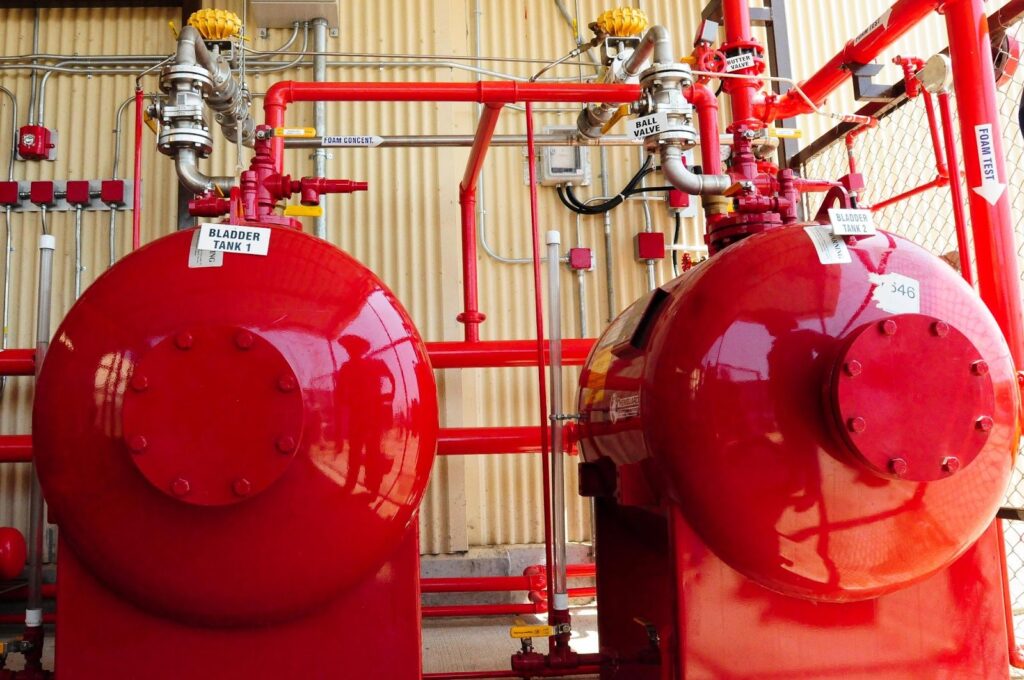
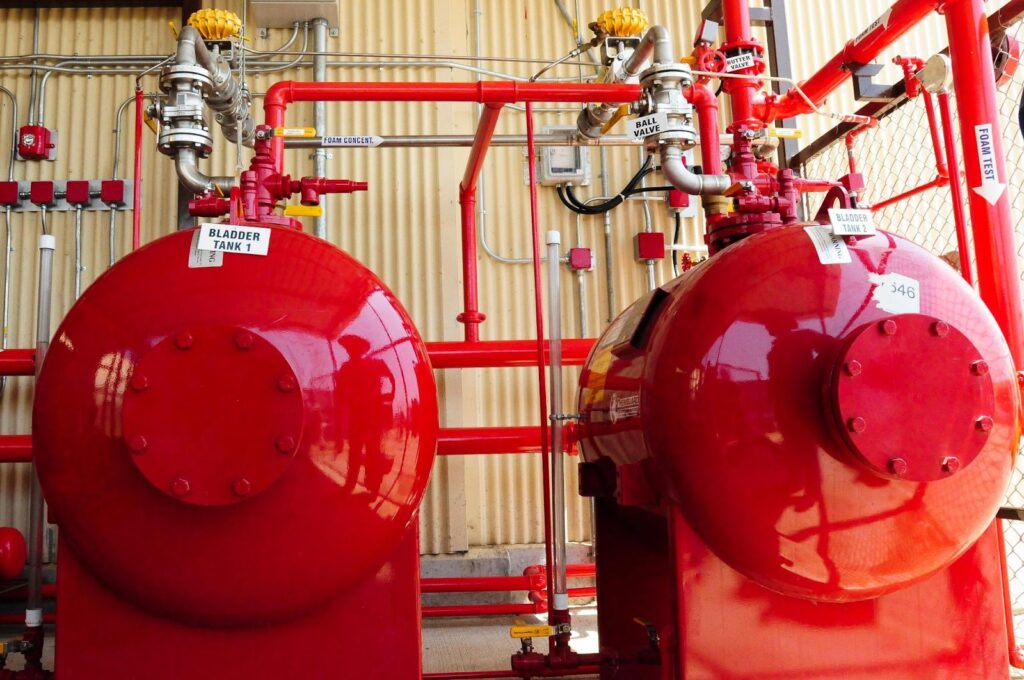
            A foam proportioning system that utilizes either a bladder tank or  foam pump and valve(s) to balance foam and water pressures at a modified venturi-            type proportioner located in the foam solution delivery piping; a foam concentrate metering orifice is fitted in the foam inlet section of the proportioner.
    1. Variable Orifice, Variable Flow Demand Proportioner

            A direct injection proportioning system that utilizes flow meters for foam concentrate and water in conjunction with a variable output foam pump control          system.

    There are many foam equipment and systems types. These include the following:
    1. Foam Equipment
    • Hose line Foam Nozzle
            A device that incorporates a venturi to draw foam concentrate through a short length of pipe and/or flexible tubing connected to the foam supply.
    • Foam and Foam Water Monitors
    • Fixed Monitor (Cannon)
            A device that delivers a large foam stream and is mounted on a stationary support that either is elevated or is at grade.
    • Portable Monitor (Cannon)
            A device that delivers a foam monitor stream and is mounted on a movable support or wheels so it can be transported to the fire scene.
    • High Back-Pressure Foam Maker
            A foam maker utilizing the Venturi principle for aspirating air into a stream of foam solution forms foam under pressure.
    • High Expansion Foam-Generating Devices
           There are two principal methods used for the generation of these types of fire-fighting foams. One method uses a modified venturi action with air aspiration flow, whereas the other requires use of a blower and screen to form the finished foam. The latter system produces high-expansion foam containing sufficient residual kinetic energy to enable it to be forced through large tubes and passageways.
    • Water Fog or Spray Nozzles
            A specially designed hose line nozzle or fixed foam maker designed to aspirate air that is connected to a supply of foam solution. Several types of                    adjustable water fog or spray nozzles for portable use provide an acceptable fire-fighting foam of adequate characteristics when supplied with certain              foam concentrates.
    1. Foam-Generating Equipment and systems
    • Open Dip Tank, Quench Tank System
            This system consists of a small, aspirating foam-maker supplied by a water line and foam concentrate educted to the foam-maker. Foam discharges                 into a mixing box, which also acts as a surface distributor for gentle foam application.
    • Foam Chambers for Large Storage Tanks
           Fire protection of large outdoor fuel storage tanks requires that several foam chambers with foam-makers be installed at equally spaced positions                   slightly below the curb angle on the top periphery of the tanks. These chambers are connected to lines on the ground that supply foam solution to each           foam-maker simultaneously in case of ignition of the flammable contents of the tank. Frangible seals at the discharge outlet of the foam chamber
    prevent vapor from entering the foam piping. These seals are designed to burst when foam pressure is applied. A screen for the air inlet to the aspirating         foam-maker prevents clogging from foreign matter, such as bird nesting material. A universal or swing pipe joint is installed at ground level in the foam           solution inlet pipe to prevent fracturing of the supply piping if an explosion precedes a tank fire.
    • Internal Tank Foam Distributing Devices
           Devices that have been developed to gently apply foam from one point, regardless of burning fuel level. These devices are required for some alcohol-               type foams.
    • Central Foam House Distributing Systems
           These systems, consist of an enclosure housing a foam concentrate supply tank and a proportioning device of an automatic or balanced pressure type.             Foam solution is supplied under adequate pressure from this foam house to the piping system and controlled by appropriate valves so that the foam               chambers with foam-makers on the burning tank receive foam solution.
    • Intermediate Back-Pressure System
            Similar to the preceding central foam house distributing systems, it utilizes strong and well-braced foam delivery pipes on the side of the tank, which              act as supports to prevent buckling of the tank from heat. This system also uses a foam truck to proportion and pump foam solution to the piping                    outside the dike or firewall of the burning tank.
    • Subsurface Foam-Injection Systems
           The subsurface foam-injection system accomplishes this by injecting foam under the pressure of the head of fuel in the tank, using the high back-                    pressure foam-maker
    • Portable foam devices for Tank Protection
           Mobile foam monitors of high-capacity discharge (foam cannon) may be used to direct a stream of foam over the open top rim of a burning tank so                 foam will fall into the burning area. These devices waste foam because of crosswinds, fire updrafts, and inability to place the equipment in an                         advantageous position.
    • Foam Water Sprinkler System
            A piping network employing automatic sprinklers, nozzles or other discharge devices, connected to a source of foam concentrate and to a water supply.
    • High Expansion Foam System
             High-expansion foam is an aggregation of bubbles resulting from the mechanical expansion of a foam solution by air or by other gases, with expansion             ratios in the range of from 20:1 to approximately 1000:1. There are three types of systems:
    (1) total flooding, (2) local application, and (3) portable.
    • Compressed Air Foam System

            A system employing compressed air foam discharge devices or hoses attached to a piping system through which foam is transported from a mixing                  chamber.

    All previously discussed systems and components are provided by Bavaria to satisfy the customers’ needs. Please check our products technical datasheets for more information or contact us.

    Learn More
  • الأنظمة التقليدية

    أنظمة الإطفاء باستخدام الرغوة

    نبذة عامة

    أنظمة الإطفاء باستخدام الرغوة:

    تستخدم الرغوة في مكافحة الحرائق بواسطة أنظمة الإطفاء اليدوية ، والمحمولة ، والثابتة ، فهي تستخدم في المقام الأول لمكافحة حرائق السوائل الملتهبة والقابلة للاشتعال ، وتصدر المؤسسة الأمريكية للوقاية من الحريق العديد من المواصفات القياسية والإرشادات التي تتناول التطبيقات المختلفة لاستخدام الرغوة في مكافحة الحرائق مثل حماية الخزانات وسدود منع انتشار السوائل الملتهبة والقابلة للاشتعال ، وكذا الحماية من مخاطر تسرب الوقود من الطائرات ، وحماية هناجر الطائرات ، وأماكن  تخزين السوائل ، وتختلف أنواع الرغوة من حيث التركيب الكيميائي ، ويؤدي ذلك إلى اختلاف معدلات تفريغ الرغوة اللازمة للإطفاء ، وكذا القدرة على ملائمة الاستخدام في حماية أنواع معينة من الوقود السائل ، وقد تستخدم الرغوة مع المسحوق الكيماوي الجاف مما يوفر حلا لكل من السيناريوهات ثنائية الأبعاد وثلاثية الأبعاد لحرائق تسرب الوقود ، تتكون الرغوة عن طريق خلط مركز الرغوة مع المياه بنسبة محددة ، ويتم ذلك عن طريق أنواع مختلفة من أجهزة الخلط اليدوية ، أو المحمولة ، أو الثابتة ، وتتوفر أجهزة عدة مختلفة لتفريغ الرغوة مثل: الرشاشات ، والفوهات ، ومدافع الرغوة ، وتستخدم الرغوة منخفضة الانتشار لإطفاء الحرائق الناتجة عن تسرب السوائل الملتهبة أو القابلة للاشتعال ، وحرائق الخزانات ، ويتم ذلك من خلال تكون بطانية متماسكة من الرغوة تعمل على تبريد الأسطح المشتعلة ، ويمكن لتلك البطانية منع انبعاث أبخرة الوقود لبعض الوقت تبعا لاستقرار وعمق الرغوة على الأسطح المشتعلة ، وتزال تلك البطانية بعد فترة مناسبة من الزمن ، وليس لهذه البطانية تأثير يذكر على المنتج الذي تلامسه ، كما يمكن أيضا استخدام الرغوة في احتواء إضعاف أو وقف انبعاث الأبخرة الملتهبة من أسطح السوائل غير المحترقة والمواد الصلبة ، يضاف إلى ذلك إمكانية استخدامها لملئ الفجوات والمناطق التي يمكن أن تتجمع فيها الغازات السامة أو الملتهبة ، وعلاوة على ما سبق تلعب الرغوة دورا هاما في عمليات تزويد الطائرات بالوقود وتقديم خدمات الصيانة ، وذلك لاحتمال حدوث تسرب كبير للوقود بسبب حادث أو عطل ما ، كما تستخدم في تطبيقات تخزين السوائل الملتهبة ، ومن ناحية أخرى تستخدم الرغوة متوسطة وعالية الانتشار في ملأ الأماكن ،  حيث تقوم بإيقاف نقل الحرارة بواسطة تيارات الحمل ومنع وصول الحريق إلى الهواء اللازم للاحتراق ، ويعمل المحتوى المائي لتلك الأنواع من الرغوة على تبريد الأسطح المشتعلة وخفض تركيز الأكسجين المحيط بالسطح عن طريق إزاحته ببخار الماء ، كما تستخدم تلك الأنواع من الرغوة في احتواء حوادث تسرب الغاز الطبيعي المسال ، حيث تساعد على تشتيت سحابة الأبخرة الناتجة عن هذا التسرب ، وتستخدم الرغوة التي تتكون من محاليل ذات توتر سطحي منخفض في إطفاء الحرائق من الفئة (A) ، وفي هذه الحالة  يعمل المحلول المائي المتصرف من الرغوة على تعريض المواد الصلبة القابلة للاشتعال للبلل وتبريد أسطحها ، وتوجد عدة أسباب قد تؤدى إلى الأداء المعيب للرغوة كوسيط للإطفاء ما لم تؤخذ تلك الأسباب بعين الاعتبار أثناء تصميم النظام ، فالرغوة قد تتعرض للتحلل ويتبخر محتواها المائي عند تعرضها للحرارة واللهب ، ومن هنا يجب أن يتم استخدام الحجم الكافي ومعدلات التفريغ المناسبة على الأسطح المشتعلة لمعادلة ذلك التأثير ، كما أن الرغوة تعتبر غير مستقرة وبالتالي فهي معرضة للتحلل بسهولة عند تعرضها للقوة الميكانيكية والفيزيائية (مثل استخدام دفق خرطوم المياه) ، وتعرض الرغوة إلى التحلل الشديد عند استخدامها مع بعض وسائط الإطفاء الأخرى ، وقد يؤدي اضطراب الهواء أو الانبعاث العنيف لغازات الاحتراق إلى انحراف الرغوة عن منطقة الاحتراق ، وتتوفر العديد من أنواع مركزات الرغوة في الأسواق ، وتختلف تلك الأنواع من حيث التركيب الكيميائي، ونسبة الخلط ، وأنواع المخاطر التي تستخدم في حمايتها بالإضافة إلى نوع النظام المستخدم لتفريغ الرغوة ، وفيما يلي الأنواع الشائع توافرها في الأسواق:
    Aqueous Film-Forming Foam (AFFF) -1. 
    • النوع : مركزات رغوة مصنعة
    • نسبة الخلط: 1% ، 3% ، 6%
    • تصنيف نسب الانتشار: رغوة منخفضة الانتشار
    • المميزات:
    – يمتاز بدرجة لزوجة منخفضة
    – يمتاز بسرعة الانتشار ، والقدرة على الاستواء على الأسطح
    – يشكل طبقة من محلول مائي تحت الرغوة ، ويحافظ على تلك طبقة طافية على أسطح الوقود الهيدروكربوني وذلك للمساعدة في إخماد الأبخرة المشتعلة وتبريد سطح الوقود
    – لطبقة المحلول المائي القدرة على أن تنتشر على الأسطح المغطاة جزئيا بالرغوة
    – هذه الطبقة من المحلول المائي قادرة على المحافظة على خواصها في حالة تعرضها للأضرار الناتجة عن القوة الميكانيكية أو الفيزيائية (مثل استخدام خراطيم المياه أو ما شابه ذلك)
    – مناسب جدا للحرائق الناتجة عن تسرب وقود الطائرات ، وذلك نظرا لسرعة انتشار على سطح وقود الكيروسين
    – لا يحتاج إلى أجهزة تفريغ متطورة بسبب قدرتها على التشكل بسرعة وبسهولة
    – يمكن أن يستخدم مع وسيط الإطفاء بالمسحوق الكيماوي جاف
    Alcohol Resistant Aqueous Film-Forming Foam (AR-AFFF) -2. 
    • النوع : مركزات رغوة مصنعة.
    • نسبة الخلط: 1×3% ، 3×3% ، 3×6%
    • تصنيف نسب الانتشار: رغوة منخفضة الانتشار
    المميزات:
    – لديه نفس مميزات مركز الرغوة من النوع AFFF
    – مناسب للاستخدام مع المذيبات القطبية ، وأنواع الوقود القابلة للذوبان أو الاختلاط مع الماء ، حيث يشكل كتلة عائمة تشبه الهلام فوق سطح الوقود بحيث تسمح تلك الكتلة للرغوة بالتكون على أسطح هذه الأنواع من الوقود
    Protein (P) Foaming Agent -3. 
    • النوع : مركزات رغوة عضوية
    • نسبة الخلط: 3% ، 6%
    • تصنيف نسب الانتشار: رغوة منخفضة الانتشار
    المميزات:
    – تنتج رغوة لزجة ذات كثافة عالية ، وثبات عالي ، مقاومة للحرارة العالية ، ومقاومة جيدة لإعادة الاشتعال
    – تنتج رغوة لها مقاومة أقل للتحلل بالتعرض للوقود المشبع من مركزات الرغوة الأخرى مثل (AFFF)  و Flouroprotein) )
    – تنتج رغوة غير سامة و قابلة للتحلل الحيوي
    Fluoroprotein (FP) Foaming Agent -4. 
    • النوع : مركزات رغوة عضوية
    • نسبة الخلط: 3% ، 6%
    • تصنيف نسب الانتشار: رغوة منخفضة الانتشار
    • المميزات:
    – يحتوى على جزيئات فلورينية تكسب الرغوة طبقة حامية من التلوث بالوقود
    – مناسب للحقن تحت سطح الوقود
    – مناسب للاستخدام مع الفوهات ومدافع الرغوة
    – مناسب لحرائق خامات النفط العميقة
    – أكثر توافقا مع وسيط الإطفاء بالمسحوق الكيماوي الجاف أكثر من مركزات الرغوة الأخرى ذات الأساس البروتيني
    Film-Forming Fluoroprotein (FFFP)-5. 
    • النوع : مركزات رغوة عضوية
    • نسبة الخلط: 3% ، 6%
    • تصنيف نسب الانتشار: رغوة منخفضة الانتشار
    • المميزات:
    – يحتوى على جزيئات فلورينية تكسب الرغوة طبقة حامية من التلوث بالوقود بالإضافة إلى قدرته على تكوين طبقة من محلول مائي على سطح معظم أنواع الوقود الهيدروكربوني
    – يتميز بسرعة الانتشار والقدرة على الاستواء على الأسطح
    – طبقة المحلول المائي قادرة على المحافظة على خواصها في حالة تعرضها للأضرار الناتجة عن القوة الميكانيكية أو الفيزيائية (مثل استخدام خراطيم المياه أو ما شابه ذلك)
    – مناسب للاستخدام مع الرشاشات بسبب قدرته على التشكل بسرعة وبسهولة
    – يتميز بأن له قدرة أعلى من مركزات الرغوة الأخرى ذات الأساس البروتيني من حيث مقاومة إعادة الاشتعال
    High Expansion Foam-6. 
    • النوع : مركزات رغوة مصنعة
    • نسبة الخلط: 2%
    • تصنيف نسب الانتشار: رغوة واسعة الانتشار
    • المميزات:
    – يستخدم في احتواء وإطفاء الحرائق من الفئة (A)  وبعض الحرائق من الفئة (B)
    – يتناسب مع الغمر الكلى للحرائق  التي تحدث في الأماكن الضيقة أو تلك التي يصعب الوصول إليها ، بالإضافة إلى عمليات إزاحة الأبخرة ، والحرارة والدخان
    – يمكن استخدامه مع أنظمة الإطفاء برشاشات المياه التلقائية
    – يمكن استخدامه في احتواء الحرائق الناتجة عن تسرب الغاز الطبيعي المسال و كذا تقليل معدلات تبخر الغاز المتسرب
    تتطلب عملية إنتاج وتوليد الرغوة لمكافحة الحرائق ثلاثة عمليات منفصلة كل منها تستهلك قدرا من الطاقة ، وهي:
    1. عملية الخلط
    2. مرحلة توليد الرغوة
    3. طريقة التوزيع
    ويوجد العديد من أنواع أجهزة خلط مركزات الرغوة بالمياه ، وهي تتضمن الأنواع التالية:
    1.  فوهة الحث (Nozzle Eductor)
    هي جهاز يتضمن فنشوري لسحب مركز الرغوة عن طريق ماسورة قصيرة و / أو أنبوبة مرنة تتصل بمصدر الرغوة.
    2. خلاط الحث الخطي (In-Line Eductor)
    هو جهاز خلط ذو فنشوري يعمل على قياس كم مركز الرغوة المطلوب خلطه بالمياه بنسبة ثابتة أو متغيره وحقنه في المياه السارية عند نقطة تقع بين مصدر المياه وفوهة التفريغ أو أي من أجهزة تفريغ الرغوة الأخرى.
    3. نظام خلط الرغوة باستخدام طلمبات المياه (Around the Pump Proportioner)
    هو نظام يستخدم خلاط ذو فنشوري يتم تركيبه على خط جانبي يربط بين مخرج طلمبة المياه ومدخلها ، مع فوهة (Orifice) ذات مقاس ثابت أو متغير لسحب مركز الرغوة من وعاء أو خزان وخلطه بالمياه ، وحقنهما في مدخل طلمبة المياه.
    4. خزان الخلط بضغط المياه (Pressure Proportioning Tank)
    هو خزان لمركز الرغوة لا يحتوى بداخله على غشاء قابل للتمدد (Bladder) ، بحيث يعتمد في إزاحة مركز رغوة لا يقل وزنه النوعي عن 1.15على تدفق المياه داخل الخزان مرورا بفوهة (Orifice) ، وذلك بهدف خلط الكم المزاح من مركز الرغوة مع المياه السارية في خط المياه بنسبة خلط ثابتة من خلال فوهة (Orifice) أخرى.
    5. نظام خلط الرغوة بربط طلمبات المياه و الرغوة (Coupled Water Motor-Pump Proportioner)
    هو نظام يحتوى على توربينة مائية يتم تركيبها على خط المياه وربطها ميكانيكيا بطلمبة لحقن مركز الرغوة ، بحيث يتم سحب مركز الرغوة بواسطة الطلمبة ثم خلطه بالمياه عند مدخل التوربينة المائية ، وتعتمد كفاءة الخلط على التصميم الصحيح لنظام الربط الميكانيكي المصمم لهذا الغرض.
    6. أنظمة خلط الرغوة بتحقيق الاتزان بين ضغط المياه ومركز الرغوة (Balanced Pressure Proportioner)
    هو نظام لخلط مركز الرغوة بالمياه يستخدم خزان مركز رغوة من النوع ذو الغشاء القابل للتمدد (Bladder Tank) أو طلبة حقن مركز رغوي بالإضافة إلى عدة محابس لتحقيق الاتزان في الضغط بين مركز الرغوة والمياه عند فتحتي دخولهما إلى الخلاط ذي الفنشوري المركب على ماسورة المحلول الرغوي ، بحيث يتم تركيب فوهة (Orifice) داخل الخلاط لتحديد الكم المتدفق من مركز الرغوة إليه بهدف تحقيق نسبة الخلط المطلوبة.
    7. أنظمة خلط الرغوة ذات الفوهة متغيرة المقاسات / ذات القدرة على الاستجابة إلى معدلات تصرف متغيرة (Variable Orifice, Variable Flow Demand Proportioner)
    هو نظام خلط يعمل بالحقن المباشر لمركز الرغوة ، بحيث يستخدم مقياس لمعدل تدفق المياه ومركز الرغوة بالإضافة إلى نظام تحكم في طلمبة حقن المركز الرغوي متغير السرعات.
    ويوجد أيضا العديد من معدات وأنظمة الرغوة  وهي تتضمن الأنواع التالية:
    1. معدات تفريغ الرغوة (Foam Equipment)
    • فوهة خرطوم الرغوة (Hose Line Foam Nozzle)
    هي فوهة تحتوي على فنشوري لسحب مركز الرغوة بواسطة ماسورة قصيرة و / أو أنبوب مرن يتصلان بمصدر مركز الرغوة ، وخلطه مع المياه ليتحول إلى محلول رغوي ثم تفريغه على صورة رغوة.
    • مدافع الرغوة / مدافع الرغوة – المياه (Foam and Foam – Water Monitors)
    – المدافع الثابتة (Fixed Monitor)
    هو جهاز يعمل على توصيل تدفقات عالية من الرغوة إلى المنطقة المستهدف تغطيتها بالرغوة ، بحيث يتم تثبيته على قاعدة ثابته ذات منسوب مرتفع أو في ذات منسوب الأرض.
    – المدافع المحمولة (Portable Monitor)
    هو جهاز يعمل على توصيل تدفقات عالية من الرغوة إلى المنطقة المستهدف تغطيتها بالرغوة ، بحيث يتم تثبيته على
    قاعدة يمكن تحريكها أو على مجموعة من العجلات ليسهل نقله إلى مكان وقوع الحريق.
    • مولدات الرغوة ذات ضغط الدخول المرتفع (High Back-Pressure Foam Maker)
    هي أجهزة لتوليد الرغوة تستخدم نظرية عمل الفنشوري  لسحب الهواء إلى المحلول الرغوي وتكوين رغوة تحت ضغط مرتفع.
    • أجهزة توليد الرغوة واسعة الانتشار (High Expansion Foam-Generating Devices)
    يوجد طريقتان لتوليد مثل هذا النوع من أنواع الرغوة المستخدمة في مكافحة الحريق ، بحيث تستخدم أحداهما تأثير فنشوري معدل مع تدفق للهواء المسحوب ، بينما تستخدم الآخرى منفاخ  (Blower) مع شبكة (Screen) لتوليد الرغوة في شكلها النهائي ، وتحتوي الرغوة المولدة باستخدام الطريقة الثانية على كم متبقي من طاقة الحركة يمكنها من الخروج عبر الأنابيب والممرات الكبيرة.
    • فوهات الرذاذ أو الضباب المائي (Water Fog or Spray Nozzle)
    هي عبارة عن  فوهة لخرطوم الرغوة أو مولد رغوة ثابت مصمم لسحب الهواء ومتصل بمصدر للمحلول الرغوي ، وتتوفر عدة أنواع من فوهات الرذاذ أو الضباب المائي  من النوع القابل للتعديل المخصص للاستخدام في الأنظمة المحمولة ، بحيث تولد رغوة مفبولة من حيث الجودة ومناسبة من حيث الخصائص ، وذلك عند إمدادها بأنوع محددة من مركزات الرغوة.
    2. معدات وأنظمة توليد الرغوة (Foam-Generating Equipment and systems)
    • نظام حماية الخزانات المفتوحة (Open Dip Tank, Quench Tank System)
    يتكون هذا النظام من مولد رغوة صغير من النوع الذي يسحب الهواء بحيث يتم إمداده بالمياه عبر خط للمياه ، بينما يتم سحب مركز الرغوة بالحث (eduction) إلى داخل هذا المولد ، ثم يتم تفريغ الرغوة في صندوق للخلط ، والذي يعمل بدوره كموزع سطحي يستخدم في نشر الرغوة على السطح برفق
    • غرف الرغوة للخزانات الكبيرة (Foam Chambers for Large Storage Tanks)
    تتطلب الوقاية من حرائق خزانات الوقود الخارجية الكبيرة تركيب العديد من حجرات  تفريغ الرغوة مع مولدات الرغوة على جدار الخزان  أسفل زاوية التقاء الجدار بالسقف (Curb Angle) بقليل وبمسافات بينية متساوية ، وتتصل مولدات الرغوة تلك بخطوط على الأرض للإمداد بالمحلول الرغوي لجميع المولدات في آن واحد ، وذلك عند اشتعال المواد الملتهبة التي يحتويها الخزان ، ويعمل العازل القابل للكسر في مخرج حجرة التفريغ على منع أبخرة المواد الملتهبة من الدخول إلى مواسير الرغوة ، وتصمم هذه العوازل بحيث تنكسر تحت تأثير ضغط الرغوة المتدفقة ، وتعمل الشبكة التي يتم تركيبها على مدخل سحب الهواء إلى داخل مولد الرغوة على منع الإنسداد بواسطة المواد الخارجية مثل مكونات عش الطيور ، ويتم تركيب وصلة من النوع المتأرجح في أسفل ماسورة دخول المحلول الرغوي عند منسوب الأرض وذلك لمنع حدوث كسر في الماسورة عندما يحدث انفجار قبل الحريق في الخزان.
    • أجهزة توزيع الرغوة داخل الخزان (Internal Tank Foam Distributing Devices)
    هي أجهزة تم تطويرها لنشر الرغوة برفق على سطح الوقود المشتعل داخل الخزان من نقطة واحدة بغض النظر ن منسوب سطح الوقود داخل الخزان ، و تتطلب بعض أنواع مركزات الرغوة المقاومة للكحول استخدام مثل هذه الأجهزة.
    • نظام توزيع الرغوة المركزي (Central Foam House Distributing Systems)
    هي أنظمة تتضمن حيزا يحتوي على خزان لمركز الرغوة وجهاز لخلط الرغوة من النوع الآلي أو النوع الذي يعمل بتحقيق الاتزان في الضغط بين مركز الرغوة والمياه، حيث يتم إمداد حجرات تفريغ الرغوة ومولدات الرغوة في الخزان المشتعل بالمحلول الرغوي بضغط مناسب من ذلك الحيز عبر نظام للمواسير يتم التحكم فيه بواسطة عدد من المحابس المناسبة لهذا الغرض.
    • أنظمة ذات ضغط دخول متوسط (Intermediate Back-Pressure System)
    هي أنظمة تشبه نظام توزيع الرغوة المركزي ، ولكنها تستخدم مواسير قوية ومثبتة جيدا في جدار الخزان لتوصيل الرغوة ، والتي تعمل كدعامة تمنع انبعاج الخزان تحت تأثير الحرارة ، ويستخدم هذا النظام أيضا سيارات الإطفاء لخلط مركز الرغوة والمياه وضخ المحلول الرغوي إلى المواسير خارج حائط احتواء (Dike) الخزان المشتعل.
    • أنظمة حقن الرغوة تحت السطح (Subsurface Foam-Injection Systems)
    هي أنظمة تعمل على حقن الرغوة في مواجهة ضغط عمود الوقود في الخزان باستخدام مولدات الرغوة ذات ضغط الدخول المرتفع.
    • أجهزة الإطفاء بالرغوة المحمولة لحماية الخزان (Portable Foam Devices for Tank Protection)
    تستخدم مدافع الرغوة المحمولة ذات معدلات التدفق العالية في توجيه سريان من الرغوة من حواف الخزانات ذات الأسطح المفتوحة بحيث تسقط الرغوة على المنطقة المشتعلة ، علما أن هذه الأجهزة تبدد الرغوة نتيجة الرياح العرضية ، والتيارات الصاعدة من الحريق ، وكذلك عدم القدرة تثبيت الجهاز في مواقع ذات ميزة نسبية.
    • نظام رشاشات المياه و الرغوة (Foam Water Sprinkler System)
    هي شبكة مواسير تتضمن رشاشات تلقائية وفوهات وأجهزة تفريغ أخرى ، بحيث تتصل تلك الشبكة بمصدر للمياه ومركز الرغوة.
    • نظام الرغوة عالية الانتشار (High Expansion Foam System)
    تعرف الرغوة عالية الانتشار على أنها تراكم فقاعات الرغوة الناتجة عن عملية التمدد الميكانيكي للمحلول الرغوي بالهواء أو بأي غاز آخر بنطاق من نسب تمدد يقع ما بين 20 : 1  إلى 1:1000 تقريبا ، ويستخدم هذا النوع من مركزات الرغوة في أنظمة الغمر الكلي ، وأنظمة الإطفاء الموضعي ، بالإضافة إلى الأنظمة المحمولة.
    • نظام الرغوة مضغوطة الهواء (Compressed Air Foam System)
    هو نظام يستخدم أجهزة تفريغ أو خراطيم خاصة بالرغوة مضغوطة الهواء ، بحيث يتم ربط تلك الأجهزة أو الخراطيم بالمواسير التي تنقل الرغوة من حجرات الخلط.
    يتم توفير جميع الأنظمة والمكونات التي سبق ذكرها من قبل شركة باڤاريا لتلبية احتياجات العملاء. لمزيد من المعلومات يرجى مراجعة المواصفات الفنية لمنتجاتنا أو الاتصال بنا.

    Learn More